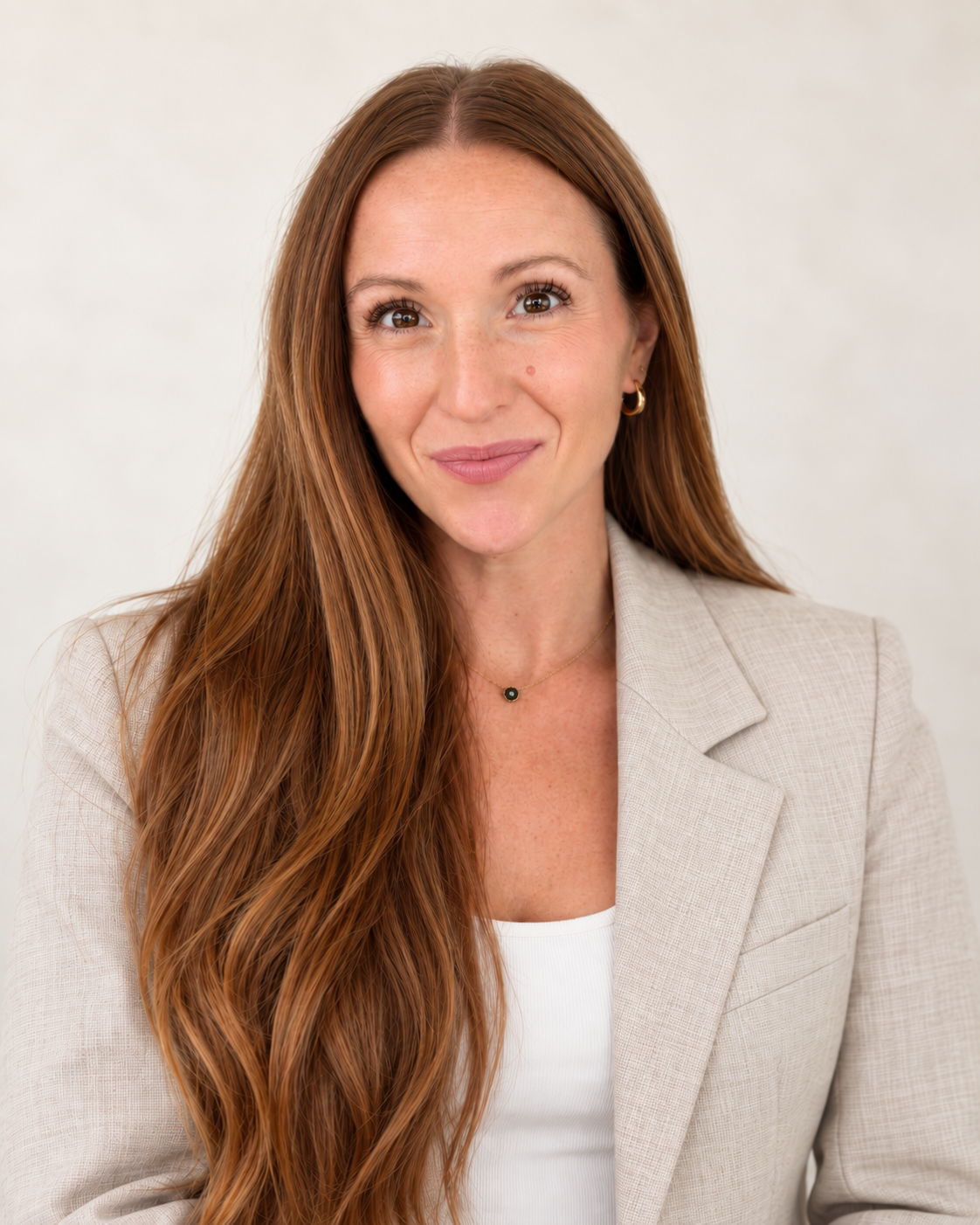
CLINICIAN / EDUCATOR / ADVISOR
Clinical rigor.
Wider perspective.
Lauren Bachman, DNP, AGNP-BC, FMCP-M
I have spent most of my career learning how much there is to understand about a person.
Some of that comes from what we can see and measure: lab work, imaging, clinical patterns, and the way the body is functioning. Some of it comes from understanding the life around those things.
Over time, I have become less interested in looking at those pieces separately and more interested in understanding how they influence one another.
I want to understand what is happening in the body, but also what may be shaping it.
That is the perspective I bring to my work now.
01 / THE FOUNDATION
Medicine gave me a way to understand the body.
I began my career in healthcare in 2010 and spent nearly a decade at Mayo Clinic.
Those were formative years for me. I learned a great deal from being in a place where complex disease was common and where structure, discipline, and careful clinical reasoning could help make sense of what was happening.
I saw how much medicine can do when people, systems, and expertise come together well.
I also spent years close to illness, uncertainty, recovery, suffering, and mortality.
That proximity changes you.
It gave me a profound respect for medicine, but it also made me aware that treating disease and understanding health are not always the same thing.
That distinction has stayed with me.

02 / THE EVOLUTION
My perspective became broader over time.
As I moved into advanced practice, I wanted to understand more of what was happening beneath the diagnosis.
Functional medicine introduced me to a more systems-based way of thinking about physiology. Longevity medicine, advanced diagnostics, genomics, imaging, and emerging technology expanded that further.
But I have never been especially interested in belonging to one school of thought.
There are things conventional medicine does exceptionally well. There are questions functional medicine asks that are deeply valuable. Technology continues to change what we are able to see and measure.
And there are still aspects of human health that do not fit neatly into any of those frameworks.
I want to understand what each can contribute.
03 / CURRENT PRACTICE
I try to hold a wider view.
My work now draws from several disciplines, but the aim is fairly simple.
Understand the physiology as deeply as possible. Understand the person living within it. Then make decisions from that fuller picture.
That may include metabolic health, cardiovascular risk, hormones, immune function, the gastrointestinal system, cognition, body composition, nutrients, or aging biology.
It may also include sleep, environment, relationships, stress, behavior, lived experience, purpose, and the practical realities of someone’s life.
I do not see those as separate conversations.
They are often part of the same one.
04 / THE HUMAN SIDE OF HEALTH
Health is more than the absence of disease.
I care deeply about better physiology.
Reducing disease risk matters. Energy, strength, cognition, fertility, recovery, and longevity matter.
But over time I have become equally interested in what health makes possible.
Health creates capacity.
It creates more room to participate in relationships, meaningful work, creativity, movement, contribution, and life itself.
And sometimes, as the physiology becomes quieter and the body is better supported, there is room for something deeper. Greater awareness. A clearer relationship with oneself. A stronger connection to what matters.
I do not believe medicine can manufacture that for someone.
But I do believe health can create more space for it.
That is part of what whole-person care has come to mean to me.
05 / TEACHING + ADVISORY
The work extends beyond individual care.
My clinical work also informs the way I teach, advise, and collaborate with healthcare organizations.
I am especially interested in how we design better models of care.
That includes functional medicine education, care-model development, clinical operations, workforce development, and broader frameworks for understanding whole-person health.
I also bring a multidimensional perspective to my practice and teaching, inviting clinicians to consider more than physiology alone.
This work explores how biology interacts with environment, behavior, relationships, lived experience, meaning, and other dimensions that shape human health over time.
The same principle guides both my clinical and advisory work: understand the person more completely, then make better decisions from that fuller picture.
06 / WHAT GUIDES THE WORK
We can understand the biology deeply without reducing a person to their biology.
That means using data without allowing data to become the entire story.
It means appreciating evidence while remaining curious about what medicine does not yet understand.
It means recognizing physiology within the context of history, environment, behavior, relationships, experiences, goals, and meaning.
And it means remembering that the purpose of medicine is not simply to produce better numbers.
The purpose is to help create the conditions for a person to live more fully.
07 / CREDENTIALS + EXPERIENCE
Education + Certification
Doctor of Nursing Practice (DNP)
Adult-Gerontology Nurse Practitioner, board certified (ANCC)
FMCP-M
Doctoral work in cancer survivorship.
Clinical Foundation
Healthcare career beginning in 2010.
Nearly a decade at Mayo Clinic.
Teaching + Education
Functional medicine education.
Speaking and professional education.
Advisory + Strategy
Clinical strategy, care-model design, and whole-person health frameworks.

Brenna San Angelo, BS, CMA
Clinical + Business Operations Manager
Brenna brings a background in environmental health, public health, medical assisting, care navigation, and healthcare operations to Transparency Health.
She earned her Bachelor of Science in Environmental Science from Northern Arizona University, with an emphasis in Policy and Administration and a minor in Public Health. That background shaped the way she thinks about health, especially the relationship between people and the environments, systems, and conditions that influence them.
Her work has moved across both public health and direct client care, giving her experience with environmental health analysis, medical assisting, care coordination, continuity, and the operational side of healthcare delivery.
At Transparency Health, Brenna works across both sides of the practice. She supports clients directly through high-touch medical assisting, navigation, communication, and follow through, while also helping manage the systems that keep the practice organized and responsive.
She is especially interested in the point where environmental health, physiology, and individual care meet, and she is continuing her path toward advanced nursing education.
Brenna brings a calm, grounded presence to the team and has a particular strength in keeping complex care connected, making sure details are followed through, and helping the client experience feel personal and seamless.
A more complete view.
A more personal approach.
If you are interested in working together, you can explore the clinical approach or reach out to learn whether Transparency Health is currently accepting new clients.